
Web developers rely on tools to improve efficiency and productivity when working on projects. As demands and expectations increase, so does the choice of toolkits available to both emerging and advanced developers.
Developers use the top web development tools today.
1. jQuery
Introduced in 2006 jQuery is a fast, multi-platform, compact, JavaScript library. This invaluable tool makes it easy for developers to add plugins, animations, create forms, and more. It is a simple way to control the interactions between JavaScript and HTML.
It is arguably one of the most used tools in Web development. jQuery is:
- Via the browser. It is supported by Firefox, Chrome, IE, Edge, Android, iOS, Safari and more. Compatible with CSS3. Besides CSS3 specifiers, jQuery also supports the style property
- When minimized and compressed in gzip, jQuery becomes only 30KB.
- Developers use jQuery because it simplifies the development process and saves time.
jQuery is the most popular JavaScript library ever built, and it installs to an the vast majority Among the million most visited websites on the Internet.
2. GitHub
Even seasoned web developers make mistakes, and that's where version control systems come into play. GitHub is a token hosting platform that provides version control and allows easy collaboration between developers.
But in essence, the platform is really designed to be a filing system for all draft documents. Developers copy their repositories to their systems, make changes locally, and then log in to those updates to the central server.
GitHub is more than just a Git repository hosting service - it also contains unique features. Besides the graphical interface, the platform provides collaboration and access control options, including task management tools, bug tracking, and wikis for each project.
What makes GitHub a powerful tool for developers are its collaboration features. Repositories can be copied, changed, and then shared with the developer. Changes can be reviewed, even accepted, and merged.
Also read: 5 best apps to spy on your phone without you having one
3. SAS
Sass, which stands for Syntactically Awesome Style Sheets, is an open source project that pioneered the CSS preprocessor genre. Regardless of the learning curve, this tool saves developers a significant amount of time.
Sass uses nesting, variables, embedded imports, and more to produce a simple, DRY-readable CSS (don't repeat yourself). It also helps keep things organized and helps developers create style sheets faster and more efficiently.
With Sass, parent-child relationships can be grouped into categories containing a few lines of code. Sass does all the hard work for you, allowing you to improve your productivity.
Besides the ability to nest delimiters using less code, developers can also import code snippets to fix CSS issues that might be affecting their user interface.
For front-end developers, Sass is a tool that will save you time and eliminate design hassle.
4. Angular
The cross-platform framework helps developers build mobile web, native web, desktop, and native mobile devices.
The open source framework extends the HTML architecture to save developers time while improving readability. With Angular's help, developers can create more powerful web applications quickly and easily.
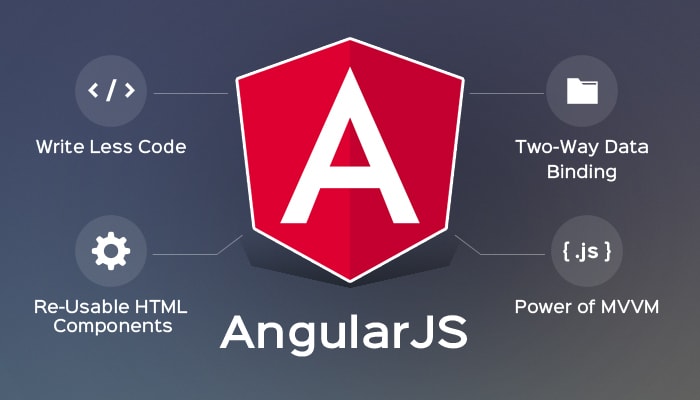
The ability to link two-way data is also beneficial for developers.
Angular also uses POJO, so there is no need for other getter and setter functions. It supports single-page application features, making it easy to create and manage online forms. The platform includes a test module to simplify the testing process, which is critical in web development.
Another benefit of Angular is its ease of integration with other libraries. Developers can also benefit from a directory of available filters, including: currency, number, date, order, capital letters, and more.
Several organizations use the Angular framework to develop their apps, including Netflix, PayPal, Freelancer, jetBlue, The Guardian, Upwork, The Weather Channel, and more. The framework is part of the MEAN stack.
Angular has a strong community of developers, making it easy to learn and discuss the framework. Additionally, there are many third-party tools available to help simplify development.
However, Angular does have its drawbacks. There is a steep learning curve, which can act as a major deterrent for some developers. Developers are also required to learn RxJS in order to use Angular.
Read more: How to enable VoWiFi in OnePlus 7T and other devices?
5. Django
Django is a Python framework that simplifies development and encourages practical software design. The framework has the reputation of being one of the safest frameworks because it is highly vulnerable to vulnerabilities.
For developers, one of the major advantages of Django is that it has a very active community that regularly contributes facilities and packages.
Documentation is excellent, which is another major benefit for developers. One of the main goals of the Django Framework is to simplify and simplify the development process. It includes everything the developer needs to create a complete application as soon as it is taken out of the box.
With all the basics already in place, creating simple apps is quick and easy. For more complex applications, there are thousands of packages available for Django, including those for testing and debugging.
Django is suitable for a wide range of projects, be it a simple project or a more complex application. The framework is multi-platform, so you can create apps that run on any operating system. It is also compatible with most major databases.
For the sake of efficiency, Django follows the DRY and KISS principles (keep it short and simple). Developers can use data flattening and stripping to avoid duplication. And having the ability to reuse the code makes it easy for developers to focus on other, more important things, like coding the unique features of the app.
In addition to all these advantages, Django also offers the REST (Representative Country Transfer) framework.
Django has been around for over a decade and is the preferred framework for some of the biggest web apps out there, like Instagram, Disqus, Spotify, and even NASA.
6. MeteorJS
MeteorJS is a free and open source JavaScript framework that can run on both the client and server side.
Another great feature of this framework is that developers can use the same code regardless of whether they create apps for mobile, desktop, or web.
Meteor has a lot to offer, but it also integrates easily with hundreds of other solutions. The framework has a large community that helps maintain a wide variety of framework extensions. Smart packages are also available, which can save a great amount of development time. There are over 14,000 packages available.
Another advantage of Meteor is that it can integrate with JavaScript libraries, including Bootstrap and React.
7. ASP.NET
ASP.NET is an open source framework for developing web applications using C # and .NET. It was developed by Microsoft and released in 2002. Although the framework has changed since its launch, it remains one of the most popular tools for web developers.
Using ASP.NET, developers can build full-stack applications using JavaScript, HTML, C #, and CSS. REST APIs can also be developed for mobile devices, browsers, and other clients. Developers can also create independently deployable microservices and run them on Docker containers.
ASP.NET has an edge over other popular web frameworks due to its blazing speed. The framework also supports authentication protocols, including multi-factor authentication and external authentication with Twitter, Google, and more.
More about: How to fix ERR_EMPTY_RESPONSE in Google Chrome!
8. Chrome developer tools
Although other web developer tools are limited, Chrome Developer Tools are useful for debugging and editing HTML and CSS in real time. A series of network tools are also available that allow you to optimize upload flows. Developers can get an inside look at what the browser does every step of the way, which can help them get a better understanding of how browsers work.
These tools are available for both Chrome and Safari. Most of the developers already own this tool and it is free to use.
However, having the ability to edit HTML and CSS directly from your browser in real time provides many advantages and is very convenient.
These 8 web developer tools are some of the best tools available today. It helps simplify the development process while improving organization and increasing productivity.


0 التعليقات: